 Call Us Now
 e-Mail Us Now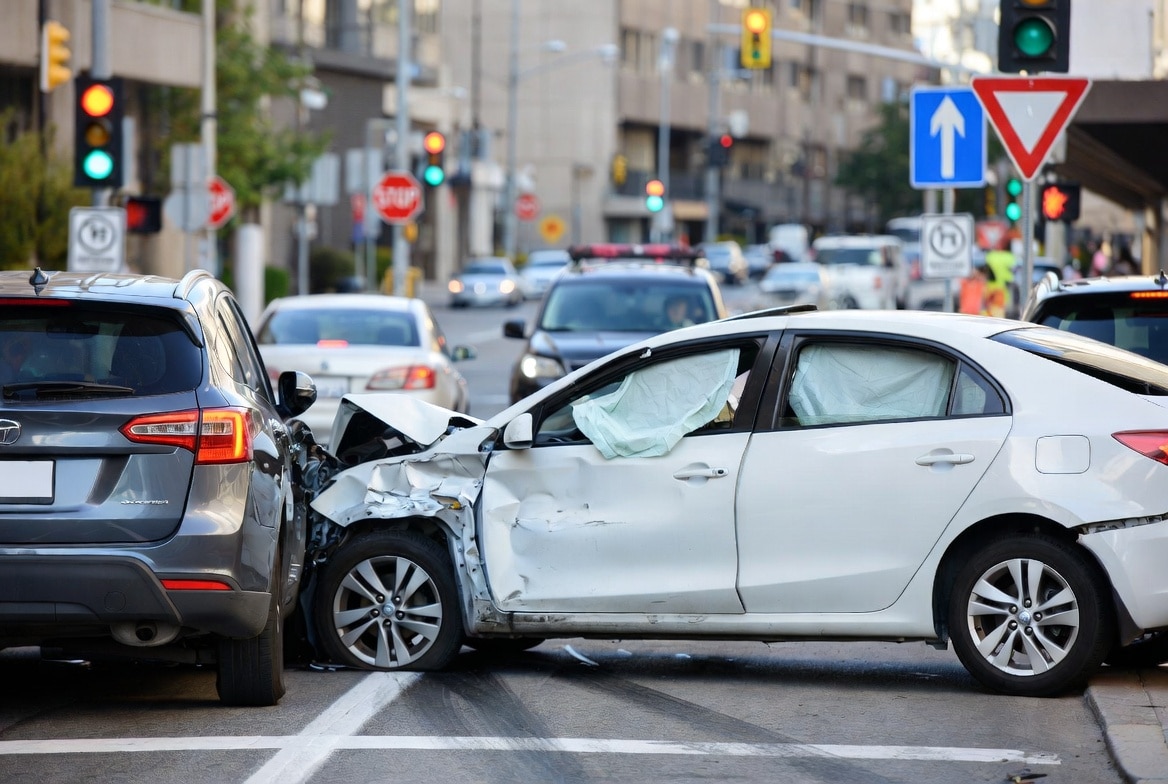
Left-hand turn accidents are among the most common and most misunderstood motor vehicle crashes. They account for a significant percentage of serious intersection collisions and frequently lead to disputes over fault, insurance denials, and litigation.
Many drivers assume that the person making the left turn is automatically at fault. While that is often the starting assumption made by insurance companies, it is not always legally correct. Fault in a left-hand turn accident depends on the specific facts of the crash, the conduct of both drivers, the applicable traffic laws, and how negligence is evaluated under state law.
This guide explains how left-hand turn accidents happen, how fault is determined, when the turning driver may or may not be responsible, how comparative negligence works, and what injured drivers should do to protect themselves.
Who Is at Fault in a Left-Hand Turn Accident?
Left-hand turn accidents are some of the most common — and most hotly disputed — motor vehicle crashes. Many drivers assume that the person making the left turn is automatically at fault. While that is often true, the law is more nuanced than most people realize.
Fault in a left-hand turn accident depends on what actually happened, what each driver did or failed to do, and how state traffic laws and negligence principles apply to those facts. Insurance companies frequently oversimplify these cases. Courts do not.
This page explains how left-hand turn accidents occur, how fault is legally determined, how state laws apply, and what injured drivers should know before accepting an insurance company’s version of events.
How Left-Hand Turn Accidents Happen
Left-hand turn accidents usually result from a combination of human error and traffic conditions rather than a single mistake. Drivers making left turns must judge speed and distance accurately, account for visibility limitations, and commit to the turn at the right moment. When any of these factors are misjudged, a collision can occur.
Visibility Issues
Drivers making left turns often have partially obstructed views due to other vehicles, roadside structures, trees, signage, buildings, or roadway curvature. Environmental factors such as sun glare, rain, fog, or nighttime driving can further reduce visibility. A driver may genuinely believe the intersection is clear when an oncoming vehicle is partially hidden.
Speed Misjudgment
Drivers frequently underestimate how fast oncoming traffic is approaching. Even modest speeding can dramatically reduce the time available to complete a left turn safely. A vehicle traveling 10–15 miles per hour over the speed limit can close distance far faster than expected.
Timing Errors and Hesitation
Left turns require commitment. Hesitating mid-turn can be just as dangerous as rushing because it leaves the vehicle exposed in the intersection. This is especially common with inexperienced drivers or in heavy traffic.
Distraction
Cell phones, passengers, navigation systems, fatigue, or mental preoccupation can prevent drivers from fully assessing oncoming traffic. Many left-hand turn accidents occur because a driver “looked but did not see.”
Failure to Yield
At the core of most left-hand turn accidents is a failure to yield the right of way. Traffic laws in every state impose a duty on left-turning drivers to yield unless a protected signal gives them the right to proceed.
Why Left-Hand Turn Accidents Are Especially Dangerous
Left-hand turn collisions often result in side-impact crashes, commonly referred to as “T-bone” accidents. These collisions are particularly dangerous because the side of a vehicle offers far less structural protection than the front or rear.
In a side-impact collision, crash forces are transferred directly into the passenger compartment. Occupants are at higher risk for head injuries, spinal injuries, shoulder injuries, pelvic fractures, and internal organ damage. Even relatively low-speed impacts can cause permanent injury because of the angle and mechanics of the collision.
Types of Intersections Where Left-Hand Turn Accidents Occur
Traffic-Light-Controlled Intersections
Left-hand turns at signalized intersections fall into two categories: protected and unprotected turns.
A protected left turn occurs when a green arrow allows the turning driver to proceed while oncoming traffic is stopped by a red light. These turns are generally safer, and accidents usually occur only when a driver disobeys a traffic signal.
Unprotected left turns, by contrast, require the driver to yield to oncoming traffic while facing a green light. These are among the most litigated left-hand turn accidents. Disputes often arise over whether the light was yellow or red, whether the oncoming driver was speeding, or whether the left-turning driver reasonably believed the turn could be completed safely.
Stop-Sign and Yield-Sign Intersections
At intersections controlled by stop signs or yield signs, drivers must rely heavily on judgment. Accidents frequently occur when a driver fails to stop completely, misjudges the speed of oncoming traffic, or misunderstands who has the right of way. These cases are often fact-intensive and require careful analysis of witness statements and physical evidence.
Uncontrolled Intersections
Uncontrolled intersections, which lack traffic signals or signs, place even greater responsibility on drivers to proceed cautiously. Fault determinations in these cases often involve comparative negligence and are rarely straightforward.
Is the Left-Turning Driver Always at Fault?
No. While the left-turning driver usually has a duty to yield, fault is not automatic.
Courts consider whether the oncoming driver was speeding, ran a red or yellow light, changed lanes unexpectedly, was distracted, or otherwise acted negligently. In many cases, both drivers share responsibility.
The legal question is not who was turning left, but whether each driver acted as a reasonably prudent person under the circumstances.
How Fault Is Determined Under Negligence Law
Fault in a left-hand turn accident is determined using traditional negligence principles. To establish negligence, a claimant must prove four elements: duty, breach of duty, causation, and damages.
Traffic laws establish duties, such as the duty to yield when turning left. A breach occurs when a driver violates that duty. Causation requires a showing that the breach actually caused the collision. Finally, damages must be proven through medical records, lost income, and other evidence.
Police reports, while important, do not legally determine fault. They are evidence — not a verdict. Courts and juries weigh all available evidence, including witness testimony, physical damage, skid marks, signal timing data, and video footage.
Negligence Per Se and Traffic Law Violations
When a driver violates a traffic statute designed to prevent accidents, that violation may constitute negligence per se. This means the conduct is considered negligent as a matter of law, provided the violation caused the injury and the injured party was within the class the statute was intended to protect.
However, negligence per se does not end the analysis. Courts still evaluate causation and comparative fault.
State-Specific Law on Left-Hand Turn Accidents
Arizona
Arizona follows a pure comparative fault system. Under A.R.S. § 12-2506, fault is apportioned among all responsible parties, and each party is liable only for their percentage of fault. Liability is generally several rather than joint, meaning each defendant is responsible only for their share of damages. Arizona courts have consistently emphasized that fault allocation is a fact-driven inquiry, as reflected in cases such as Roaf v. Stephen S. Rebuck Consulting, LLC, 550 P.3d 173.
In practice, Arizona courts and juries rely on a combination of evidence, including witness testimony, police reports, physical evidence, and, in some cases, accident reconstruction testimony. In Bullock v. Geyer, 454 P.2d 865, the court relied in part on an investigating officer’s analysis of skid marks and vehicle positions to evaluate how the collision occurred and how fault should be assessed.
Importantly, statements made at the scene of an accident are not automatically conclusive. In Randall v. Alvarado-Wells, 187 Ariz. 308, the court explained that admissions of fault that are merely conclusory — such as apologizing or saying “it was my fault” — do not establish negligence unless supported by underlying facts.
Arizona statutes also impose specific duties on drivers making left turns. A.R.S. § 28-751 governs the required position and method of turning, while A.R.S. § 28-754 requires appropriate signaling and mandates that turns be made only when safe. Together, these statutes reinforce the principle that left-hand turns must be executed from the proper lane, with adequate signaling, and only when traffic conditions permit the turn to be made safely.
Arizona case law reflects a consistent theme: left-hand turns are inherently dangerous and demand heightened care. In McIver v. Allen, 33 Ariz. 28, the Arizona Supreme Court recognized that left turns on busy highways require extra precaution, even when the oncoming driver may also be negligent, such as by speeding. At the same time, Pelayo v. Bell, 477 P.2d 537, makes clear that contributory negligence is often a jury question, particularly when the oncoming driver’s conduct — such as misleading signals — may have reasonably induced the left turn. In Bauer v. Crotty, 167 Ariz. 159, reconstruction testimony supported a finding that an unsafe left turn caused the collision.
In short, Arizona courts scrutinize left-turning drivers closely, but fault may still be shared when the oncoming driver’s actions contribute to or mislead the turning driver.
California
California law imposes a particularly clear duty on drivers making left-hand turns. California Vehicle Code § 21801(a) requires a left-turning driver to yield the right of way to oncoming vehicles that are close enough to constitute a hazard and to continue yielding until the turn can be made with reasonable safety.
California courts have consistently enforced this statutory duty. In Dominguez v. Pantalone, 212 Cal. App. 3d 201, the court held the left-turning driver wholly at fault for turning in front of a motorcycle. Similarly, Gilmer v. Ellington, 159 Cal. App. 4th 190, emphasized that the duty to ensure safety across each lane of traffic rests squarely with the left-turning driver and cannot be delegated to oncoming drivers.
That said, California recognizes comparative negligence. In Wickesser v. Burns, 232 Cal. App. 2d 344, the court acknowledged that contributory negligence — such as a driver’s choice of evasive maneuver — may factor into liability. Likewise, Cozad v. Henry, 206 Cal. App. 2d 276, confirms that whether a left-turning driver exercised reasonable care is often a question of fact.
California law also requires drivers to exchange information and render aid after an accident. California Vehicle Code §§ 20003 and 16025 establish post-collision duties that ensure necessary information is available to evaluate fault and liability. While not determinative of fault, compliance with these statutes plays an important role in the claims process.
Florida
In Florida, left-hand turn liability begins with the statutory duty to yield. Florida Statute § 316.122 requires a driver turning left within an intersection to yield the right of way to oncoming traffic that is within the intersection or so close as to constitute an immediate hazard.
Florida applies a comparative fault framework under Fla. Stat. § 768.81, which allows fault to be apportioned among all responsible parties. Courts routinely instruct juries to consider the conduct of every party who contributed to the accident, regardless of whether that party is named as a defendant. This principle is reflected in cases such as Garlock, Inc. v. Harriman, 665 So. 2d 1116.
Florida courts have repeatedly held that failing to yield while making a left-hand turn is strong evidence of negligence. Decisions such as Pryear v. State, 243 So. 3d 479, Shaver v. Carpenter, 157 So. 3d 305, and Weeks v. Ranson, 419 So. 2d 722, reinforce the principle that left-turning drivers bear a significant responsibility to ensure the turn can be made safely.
Although rear-end collisions are governed by different rules, Florida’s rear-end presumption cases provide a useful analogy. In Padilla v. Schwartz, 199 So. 3d 516, and McCloud v. Swanson, 681 So. 2d 898, the courts explained that legal presumptions can be rebutted by evidence showing negligence by the other driver. This is relevant because insurers often treat left-hand turns as “automatic fault” situations, even though Florida law allows rebuttal evidence to shift or share liability.
Florida statutes also outline the role of law enforcement following a crash. Fla. Stat. § 316.070 governs the exchange of information at the scene, while §§ 316.640 and 316.645 address enforcement authority and arrest powers. While police reports and citations often influence early insurance evaluations, civil fault is ultimately determined through the application of negligence and comparative fault principles.
Texas
In Texas, left-hand turn liability begins with the statutory duty to yield under Texas Transportation Code § 545.152. This statute requires a driver turning left to yield the right of way to oncoming vehicles that are in the intersection or close enough to constitute an immediate hazard.
Texas applies a modified comparative responsibility system. Under Tex. Civ. Prac. & Rem. Code § 33.003, the trier of fact determines each party’s percentage of responsibility, and a claimant generally cannot recover damages if they are more than 50% responsible for the accident. The Texas Supreme Court has confirmed that fault determinations are factual questions reserved for the trier of fact, as reflected in Nabors Well Servs. v. Romero, 456 S.W.3d 553.
Texas courts also recognize negligence per se when a driver violates a traffic ordinance. In Zucht v. Brooks, 216 S.W. 684, the court held that violating an ordinance governing left turns could constitute negligence per se and serve as a proximate cause of a collision.
At the same time, Texas law makes clear that fault is not automatic. In Waring v. Wommack, 945 S.W.2d 889, the court emphasized that a plaintiff must still prove that the defendant failed to act as a reasonably prudent person under the circumstances. Similarly, Edwards v. Leal, 1986 Tex. App. LEXIS 12756, explains that misjudging speed or distance does not automatically establish negligence in every case.
When evidence supports it, Texas juries may find the left-turning driver primarily responsible. In Cleaver v. Dresser Industries, 570 S.W.2d 479, the jury concluded that turning left when it was unsafe to do so constituted negligence.
Texas law also draws an important distinction between evidence and legal determinations of fault. Police collision reports prepared under Texas Transportation Code §§ 550.062 and 550.064 are important evidence, but they do not determine liability. As explained in In re Gallup, 2020 Tex. App. LEXIS 7342, and Gillaspie v. Department of Public Safety, 152 Tex. 459, agencies such as the Department of Public Safety may assess the probability of liability for administrative purposes under § 601.154, but only courts and juries determine fault.
Finally, Texas courts recognize that expert testimony is not always required to establish causation or fault in traffic collisions. In Tuyen Le v. Shamblin, 2021 Tex. App. LEXIS 7975, and Pilgrim’s Pride Corp. v. Smoak, 134 S.W.3d 880, the courts held that lay testimony and physical evidence may be sufficient when the circumstances fall within the common understanding of jurors.
Evidence That Can Shift or Reduce Fault
Evidence plays a critical role in left-hand turn cases. Speed data, event-data recorders, traffic signal timing, surveillance video, dashcam footage, and independent witnesses often determine whether fault is shared or shifted.
Accident reconstruction is not always required. As Texas courts have recognized, juries may rely on common experience, physical evidence, and lay testimony in many traffic collision cases.
How Insurance Companies Evaluate Left-Hand Turn Claims
Insurance companies often treat left-hand turn accidents as presumptive liability cases. This can lead to low initial settlement offers or outright claim denials.
Early recorded statements, incomplete police reports, and lack of preserved evidence frequently work in the insurer’s favor. Once liability is disputed with supporting evidence, insurers often reassess their position.
Common Injuries in Left-Hand Turn Accidents
Left-hand turn collisions often cause serious injury because side impacts transmit force directly into the passenger compartment with less structural protection than frontal impacts.
Disc Injuries and Spine Trauma
Bulging or herniated discs are common due to lateral loading and rapid torso rotation. Symptoms may include radiating pain, numbness, tingling, weakness, and reduced mobility. Some patients require injections, surgery, or ongoing treatment.
Shoulder and Rotator Cuff Tears
Occupants often brace for impact. That reflex can tear the rotator cuff or labrum. These injuries can severely limit lifting, reaching, and work capacity and may require surgery.
Head Injuries and Concussion
Even without direct head impact, acceleration-deceleration forces can cause concussions. Symptoms include headaches, dizziness, cognitive fog, and mood changes.
Rib, Chest, and Internal Injuries
Door intrusion and seatbelt forces can fracture ribs or cause internal bruising. These can be extremely painful and slow to resolve.
Hip, Knee, and Lower Extremity Injuries
Side intrusion commonly impacts legs and hips. These injuries can require orthopedic treatment and reduce long-term mobility.
Chronic Pain and Soft-Tissue Conditions
Many left-turn victims experience persistent pain that affects sleep, work, relationships, and quality of life, even when imaging is “normal.”
How Much Is a Left-Hand Turn Accident Case Worth?
The value of a left-hand turn accident case depends on the severity of injuries, the degree of fault assigned to each party, available insurance coverage, and the impact of the injuries on the injured person’s life.
Disputed liability cases often settle for significantly more after litigation begins and evidence is fully developed.
Do I Need a Lawyer for a Left-Hand Turn Accident?
Because liability is often disputed and insurance companies rely heavily on assumptions, left-hand turn accidents benefit from early legal analysis. An experienced lawyer can identify evidence, challenge fault allocations, and protect against undervaluation.
Contact Our Car Accident Lawyers
If you were injured in a left-hand turn accident, the facts matter. Traffic laws provide the framework, but evidence determines responsibility.
Contact Milano Legal Group for a free consultation at (855) 545-1777. We can evaluate fault, preserve evidence, and help you pursue full compensation.