Call Us Now
 e-Mail Us Now
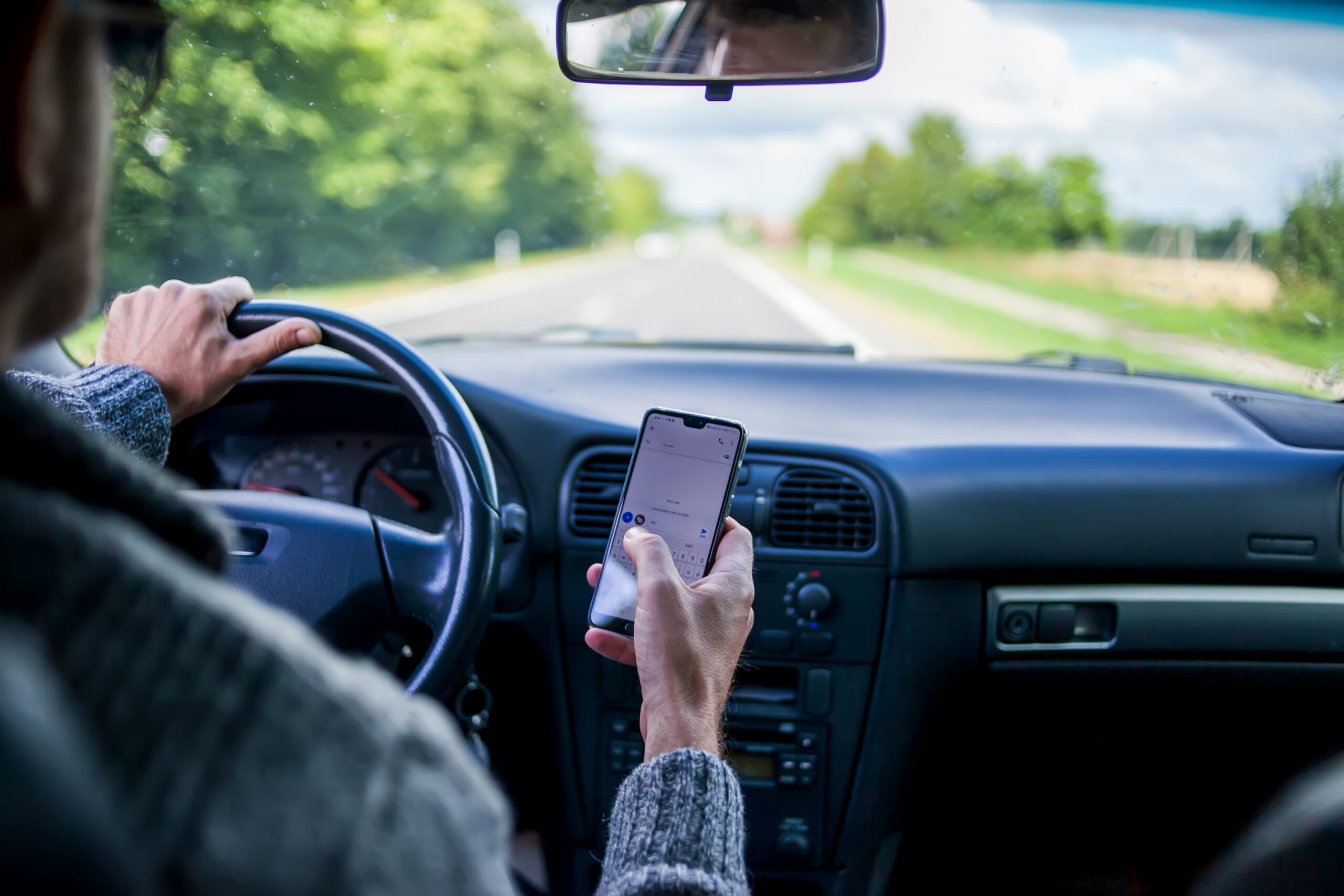
Distracted driving has become one of the most common causes of serious crashes on Florida roads. A driver glancing at a phone for a few seconds can travel the length of a football field without watching the road. If a distracted driver injured you, proving that they were distracted, and that it caused the crash, is central to your claim. The challenge is that drivers rarely admit to it, so building the evidence matters.
This guide explains what counts as distracted driving, how Florida law treats it, and the kinds of evidence that prove a driver was not paying attention when they hurt you.
What Counts as Distracted Driving
Distracted driving is any activity that takes a driver’s attention away from the road. It generally falls into three categories: visual distraction, taking the eyes off the road; manual distraction, taking the hands off the wheel; and cognitive distraction, taking the mind off driving. Texting is especially dangerous because it involves all three at once. Other examples include talking on the phone, eating, adjusting the navigation or radio, grooming, and turning to talk with passengers.
Florida’s Texting While Driving Law
Florida has taken a firm position on the most dangerous form of distraction. Under Florida Statute 316.305, known as the Florida Ban on Texting While Driving Law, a driver may not manually type or send data on a wireless device, including texting and emailing, while operating a vehicle. A driver who violates this law and causes a crash has broken a safety statute, which can be strong evidence of negligence in your injury claim. The law also allows a driver’s phone billing records to be used as evidence in certain crashes involving injury or death.
How to Prove a Driver Was Distracted
Digital and Phone Evidence
Phone records can show whether the driver was texting, calling, or using data at the moment of the crash. This evidence is often decisive, but it usually must be requested formally and preserved quickly before it is lost, which is one reason acting early matters.
Witnesses and Video
Independent witnesses may have seen the driver looking down or holding a phone. Dashcam footage, traffic cameras, and nearby surveillance can capture the driver’s behavior or the crash itself. This footage is frequently overwritten within days, so securing it fast is critical.
The Scene and the Driver’s Statements
The police report, the physical evidence at the scene such as a lack of braking, and any admissions the driver made can all support a distraction claim. Even a casual “I just looked down for a second” can become important evidence.
How Florida Fault Rules Affect Your Claim
Florida follows a modified comparative negligence rule under Florida Statute 768.81. You can recover if you were partly at fault, with your recovery reduced by your share of the blame, but if you are found more than 50 percent at fault, you recover nothing. A distracted driver’s insurer may try to shift blame onto you to reduce what it pays, which is why clear evidence of the driver’s distraction is so valuable. Florida also generally requires most injury claims to be filed within two years of the crash.
Common Types of Distracted Driving Crashes
Distraction shows up in predictable crash patterns. A driver looking at a phone often fails to notice stopped or slowing traffic, causing a rear-end collision. A distracted driver may drift out of their lane, sideswiping another vehicle or running off the road. Others roll through red lights and stop signs, or fail to yield to pedestrians and cyclists, because their attention was elsewhere. Recognizing these patterns helps establish what happened, because the way a crash occurred often points to distraction even before the phone records confirm it. Matching the crash pattern to the physical evidence at the scene is often what prompts a closer look at a driver’s phone activity in the first place.
Compensation in a Distracted Driving Claim
If a distracted driver injured you, you may be entitled to recover past and future medical expenses, lost wages and reduced earning capacity, rehabilitation costs, property damage, and non-economic damages such as pain and suffering and emotional distress. Where a driver’s conduct was especially reckless, such as ignoring repeated warnings while texting at high speed, the facts may support a larger claim. As with any injury case, the value depends on the seriousness and permanence of your injuries and on how thoroughly your losses are documented, so prompt and consistent medical care protects both your health and your recovery. Keeping a clear file of your bills, treatment notes, and any time missed from work makes it far easier to establish the full value of your claim later.
Why Distracted Driving Is So Dangerous
Distracted driving is dangerous because it removes a driver’s attention at the exact moment split-second reactions are needed. A driver reading a text at highway speed can travel the length of a football field essentially blind to what is ahead, leaving no time to brake or steer away from a hazard. Unlike impaired driving, distraction can happen to otherwise careful drivers in an instant, and it is now among the leading causes of serious crashes on the road. Because a distracted driver often does not brake at all before impact, these collisions tend to happen at full speed, which is part of why the resulting injuries are frequently severe. It is also why a distracted driver is often fully responsible for a crash: when a driver never reacts at all, there is rarely a credible argument that the injured person could have done anything to avoid it. That total failure to respond, captured in the absence of skid marks or braking, frequently becomes some of the clearest evidence of fault in the case.
What Not to Do After a Distracted Driving Crash
- Do not assume the driver will admit to being distracted, since most will not
- Do not delay, because phone records and video evidence can be lost quickly
- Do not give a recorded statement to the other driver’s insurer before speaking with an attorney
- Do not skip medical care, as gaps are used to dispute your injuries
- Do not accept an early settlement before the evidence of fault is developed
State-Specific Notes
The texting ban and modified comparative negligence rule above are Florida rules. Milano Legal Group also serves Arizona, California, and Texas, each with its own distracted driving laws and fault standards. The strength of a distracted driving case often depends on quickly preserving phone and video evidence, which is true no matter which state the crash happened in.
How Milano Legal Group Can Help
Proving distraction takes fast action and the right legal tools to obtain phone records and preserve video before it disappears. We investigate the crash, pursue the digital evidence that shows what the driver was doing, counter attempts to shift blame onto you, and build the strongest possible case for full compensation. Learn more about our local team on our Fort Lauderdale page.
We work on a contingency basis, so there are no fees unless we win. Contact Milano Legal Group today at 855-545-1777 for a free, no-obligation case evaluation. Serving clients throughout Arizona, California, Florida, and Texas.