Call Us Now
 e-Mail Us Now
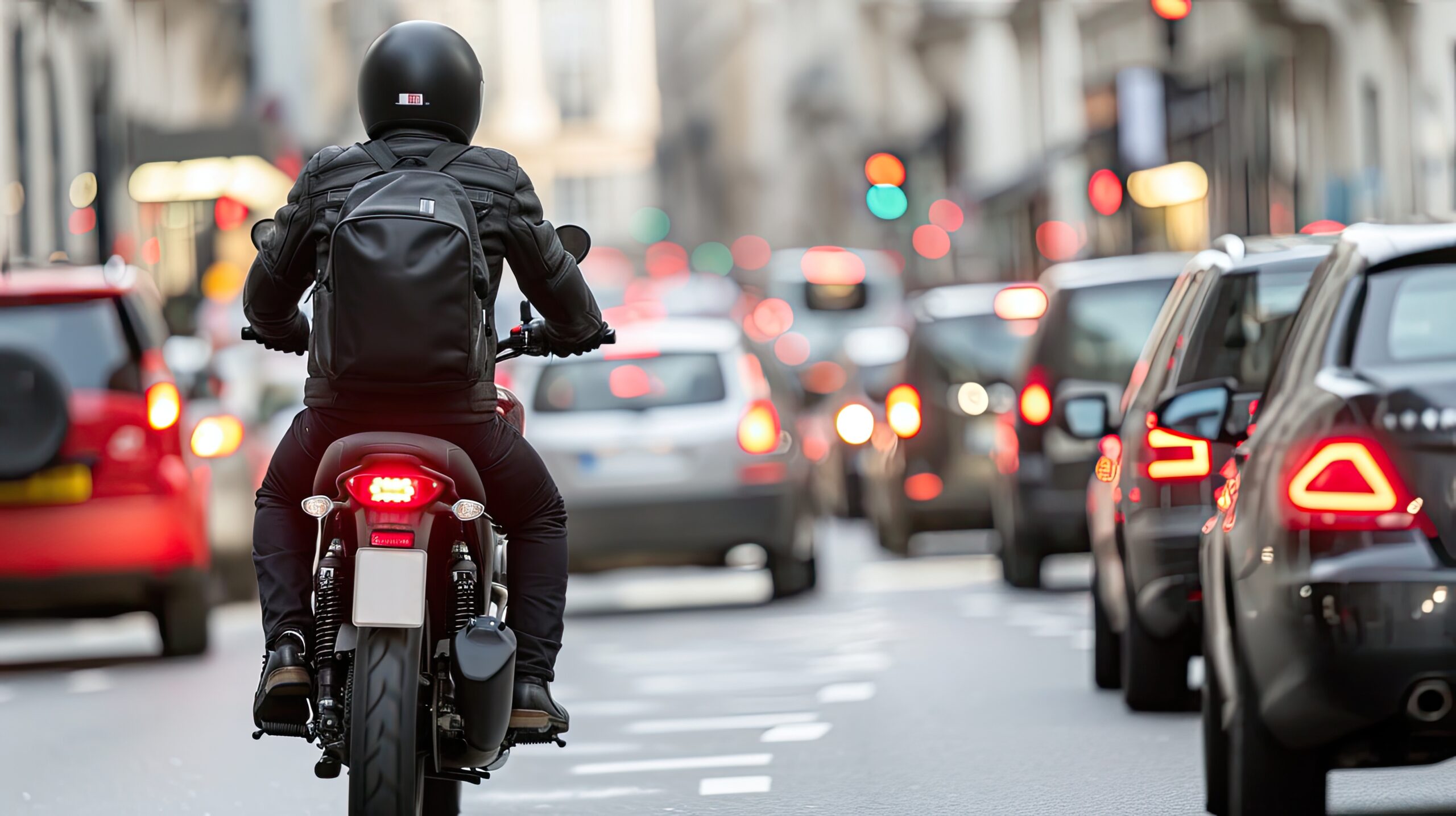
Lane splitting is legal in California. No other state allows it. That should make fault simple after a crash. It rarely does.
The adjuster on the other side may assume you broke the law just by riding between lanes. Plenty of riders assume the same thing. Then they say something at the scene that costs them later. This guide covers what the statute actually says, why the speed numbers everyone quotes are not law, how fault really gets divided, and which evidence decides these cases.
What California Law Actually Says
Assembly Bill 51 added lane splitting to the Vehicle Code. It took effect on January 1, 2017. California Vehicle Code Section 21658.1 defines the maneuver as riding a two wheeled motorcycle between rows of stopped or moving vehicles in the same lane. It applies on divided and undivided roads alike. The statute also lets the California Highway Patrol publish safety guidelines.
That is the whole statute. It defines the maneuver and authorizes guidance. It does not ban lane splitting. It sets no condition based on speed, traffic, or road type.
The Speed Limits You Have Read About Are Not Law
Search for lane splitting rules and the same two numbers come up everywhere. Stay within 10 miles per hour of surrounding traffic. Never split above 30 miles per hour. Both figures came from CHP guidelines withdrawn back in 2014, after questions about the agency’s authority to issue them. Neither number ever entered the Vehicle Code. Neither appears in the current guidance.
The CHP motorcyclist safety guidance in force today lists no speed caps at all. It tells riders to weigh the total environment. It warns that danger rises as overall speed and speed differential rise. It notes that the far left lanes are typically the safer place to split. It cautions riders away from big rigs and buses. It also confirms two points in your favor. Riding the shoulder is illegal and does not count as lane splitting. Blocking a splitting rider on purpose, or opening a door to impede one, is illegal too.
This matters directly. If an adjuster says you exceeded the legal lane splitting speed limit, no such limit exists. The guidance educates riders. It does not regulate them. Departing from a safety tip breaks no law.
How Fault Actually Gets Decided
Lane splitting is lawful, so fault comes down to ordinary negligence. The question is whether each person acted reasonably in the conditions that existed. Riding between lanes is not the issue by itself.
When the Driver Is at Fault
Most lane splitting collisions start with a driver changing lanes without signaling or checking a mirror. Others start with a distracted driver drifting toward the gap. On the 405 and the 101, drivers in stop and go traffic ease toward the lane line without looking. A rider in that space has almost no room to react. The CHP guidance treats a deliberately closed gap and an opened door as unlawful acts.
When the Rider Shares Fault
A rider can still carry part of the blame. Splitting at a wide speed differential in dense traffic invites that argument. So does weaving repeatedly between lanes. So does riding the shoulder or splitting past a big rig at speed. Sharing fault does not end your claim in California. It only reduces it.
Partial Fault Does Not End Your Claim
California follows pure comparative negligence. Your percentage of fault reduces your compensation, but it never bars it. Picture a crash with 200,000 dollars in damages. A rider found 30 percent responsible still recovers 140,000 dollars. Even a rider carrying most of the blame keeps the remaining share.
This separates California from the other states we serve. It also means an insurer’s early blame assignment is an opening position, not a verdict. Moving your share from 40 percent down to 15 changes the value of the case substantially. Insurers know that, which is why they push those percentages hard from the start.
Evidence That Decides Lane Splitting Cases
These crashes come down to a few seconds and two conflicting accounts. Independent evidence therefore carries unusual weight. Helmet cameras and bike mounted cameras give you the strongest proof available. Save that footage immediately rather than leaving it on a device you keep using. Dashcam video from nearby cars disappears fast, because most units record on a loop and overwrite within days.
Los Angeles offers heavy commercial and traffic camera coverage. Those systems keep footage for a short window, so someone has to request it quickly. Damage patterns, the resting position of the bike, and any turn signal visible on video all show which vehicle moved into which space. Witness names collected at the scene matter more here than in most cases. A neutral driver who watched the lane change often decides the whole dispute.
Why the Injuries Run Deep in These Crashes
A splitting rider sits close to two rows of metal. Even a slow speed contact can throw a rider into an adjacent car. Broken wrists, shoulders, and collarbones follow. So do road rash, knee injuries, and head trauma. Traffic on the 405 moves slowly, which fools people into expecting minor harm.
Document everything from the first day. See a doctor even if you only feel shaken, because adrenaline hides symptoms for hours. Keep a short daily note about pain, sleep, and what you can no longer do at work. That record answers the argument that you recovered quickly.
The Deadline That Controls Your Case
California generally gives you two years from the crash to file a personal injury lawsuit. Code of Civil Procedure Section 335.1 sets that deadline. A government vehicle or public entity changes the picture. Then you may have to file a formal claim within six months, a much shorter window that catches people off guard. Video evidence disappears far sooner than either deadline, so the practical clock runs in days.
What Not to Do After a Lane Splitting Crash
- Do not apologize for lane splitting or treat it as an admission, because the maneuver is legal
- Do not accept an adjuster’s claim that you broke a lane splitting speed limit
- Do not let helmet camera or phone footage sit on a device you keep using
- Do not wait to request nearby business or traffic camera video
- Do not take an early offer that assigns you a fault percentage before anyone reviews the video
State-Specific Notes
Everything above reflects California law. Arizona, Florida, and Texas all prohibit lane splitting. Arizona does allow a narrower practice called lane filtering, under limited conditions on certain roads. Fault rules differ as well. Arizona applies pure comparative negligence like California. Texas and Florida both cut off recovery once an injured person’s share of fault passes 50 percent. A crash outside California changes the analysis considerably.
How Milano Legal Group Can Help
Riders lose these cases to assumptions rather than to the law. We establish the legality of the maneuver at the outset. We move quickly to secure video before it disappears. Then we push back on the inflated fault percentages insurers hand motorcyclists by default. Learn how we handle rider injury cases on our motorcycle accidents page. You can also see our local practice on our Los Angeles car accident lawyer page.
We work on a contingency basis, so there are no fees unless we win. Call Milano Legal Group today at 855-545-1777 for a free, no-obligation case evaluation. Serving clients throughout Arizona, California, Florida, and Texas.