Call Us Now
 e-Mail Us Now
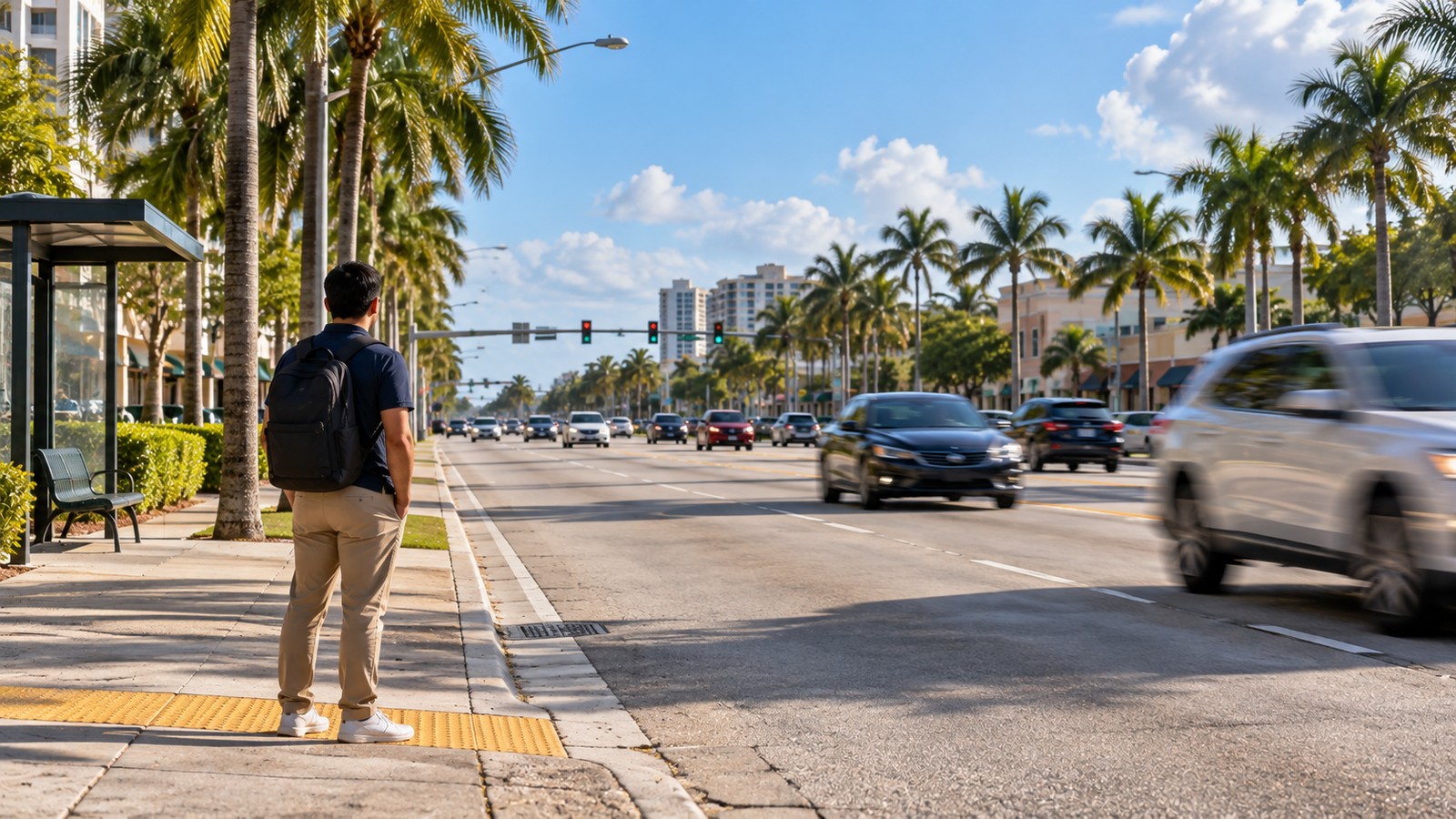
On September 28, a car struck and killed a person crossing West Broward Boulevard near Southwest 18th Avenue. It happened around ten in the morning, in full daylight. Fort Lauderdale police closed the eastbound lanes for about two hours. They have not said what caused this Fort Lauderdale pedestrian accident.
Anyone who walks in this city knows that stretch. Broward Boulevard carries wide lanes of fast traffic past bus stops, shops, and homes. Long gaps separate the signals. A crash on a road like this raises the same questions every time. Who had the right of way, and what does the law give the person who was hit?
Why Roads Like Broward Boulevard Are So Dangerous
Florida has one of the worst pedestrian safety records in the country. In June 2026, Smart Growth America released its latest Dangerous by Design report. It ranked Florida the fifth most dangerous state for people on foot. From 2020 through 2024, Florida lost 3,726 pedestrians, the third highest total in the nation. The Miami, Fort Lauderdale, and Palm Beach metro area ranked 17th among the country’s most dangerous metros.
The danger concentrates on a certain kind of street. Broward Boulevard, Sunrise Boulevard, Federal Highway, and State Road 7 share the same design. Each has many wide lanes, speed limits of 35 to 45 miles per hour, and crosswalks spaced far apart. A person leaving a bus stop may face a quarter mile walk to the nearest signal.
Speed turns a mistake into a death. A person struck at 40 miles per hour faces far worse odds than one struck at 25. Drivers on these roads often travel well above the posted limit.
What Florida Law Requires of Drivers
The rules for walkers and drivers sit in section 316.130 of the Florida Statutes. Drivers carry several duties under it.
At a signal, a driver must stop before the crosswalk and stay stopped for a person crossing with the light. At a crosswalk without a signal, the driver must yield to a person in the crosswalk. Marked crosswalks with signs carry the same duty to stop.
One subsection matters more than the rest. Subsection (15) requires every driver to use due care to avoid hitting any pedestrian. That duty applies no matter where the person was walking. A driver who was texting or speeding cannot escape blame because the pedestrian stood outside the painted lines.
What the Law Requires of People on Foot
The same statute places duties on pedestrians, and insurers quote them often.
- A person crossing outside a crosswalk must yield to vehicles on the road.
- Between two adjacent intersections with working signals, a person may cross only in a marked crosswalk.
- No one may suddenly leave the curb and step into the path of a vehicle that is too close to stop.
- Outside a crosswalk, a person must cross by the most direct route to the far curb.
These rules explain why adjusters ask one question first. Was the person in a crosswalk? The answer shapes the claim, but it does not end it.
Crossing Mid Block Does Not Erase a Fort Lauderdale Pedestrian Accident Claim
Florida divides fault by percentage. Under section 768.81, a jury assigns each side a share of the blame. Your damages drop by your own share.
A 2023 change made the stakes higher. A person found more than 50 percent at fault for their own harm now recovers nothing. Before that change, even a mostly at fault pedestrian could collect a reduced amount.
Consider a man who crosses Broward Boulevard mid block at night. A driver going 55 in a 40 zone hits him. A jury could find the pedestrian 30 percent responsible for crossing where he did. It could put 70 percent on the driver for speed. The pedestrian still recovers 70 percent of his damages.
Change the facts, and the result flips. Suppose the driver was traveling at the limit. The man ran out from between two parked trucks. A jury may put most of the fault on him. Above 50 percent, his claim fails.
The percentage decides everything, and evidence decides the percentage. Useful proof includes:
- Video from buses, storefronts, and traffic cameras along the corridor
- Data from the vehicle’s event recorder
- Phone records that show whether the driver was texting
- Street lighting and sight lines at the exact spot
- The distance to the nearest marked crosswalk
- Statements from witnesses who stayed at the scene
Who Pays the Medical Bills
Florida’s no-fault system covers pedestrians too. If you own an insured car, your own personal injury protection pays first, even though you were on foot. A policy held by a relative you live with may cover you if you own no car. When neither applies, the policy on the vehicle that hit you generally pays, as long as you are a Florida resident.
That coverage usually tops out at $10,000. A pedestrian struck by a car almost always suffers injuries that exceed it. Broken legs, pelvic fractures, and head trauma are common.
Florida limits claims for pain and other non-economic losses. The injury must be permanent, cause a significant and permanent loss of an important bodily function, or leave significant and permanent scarring. Most serious pedestrian injuries meet that test.
When the Driver Flees or Has No Insurance
Hit and run crashes are common on these corridors, especially after dark. Industry estimates also place Florida among the states with the most uninsured drivers. Neither fact has to end a claim.
Uninsured motorist coverage on your own auto policy usually protects you as a pedestrian. A policy held by a relative in your household may do the same. This coverage steps into the shoes of the driver who fled or carried too little insurance. Many people who were hit while walking never think to check their own car insurance.
Deadlines That Apply
Florida shortened the filing deadline in 2023. A negligence lawsuit must now begin within two years of the crash. The same two year period applies to a wrongful death claim, counted from the date of death.
Poor road design sometimes shares the blame. A missing crosswalk, a dead streetlight, or a blocked sight line may point to a government agency. Claims against the state, the county, or the city require written notice before a lawsuit and carry damage caps. Those claims need early attention.
What to Do After Being Hit
- Call 911 and wait for Fort Lauderdale police or the Broward Sheriff’s Office.
- Accept transport to the hospital. Broward Health Medical Center in Fort Lauderdale is a Level I trauma center.
- See a doctor within 14 days, because Florida’s no-fault benefits depend on it.
- Photograph the scene, the lighting, and the nearest crosswalk as soon as you can.
- Collect names and numbers from witnesses.
- Keep your shoes and clothing from the crash unwashed.
- Give no recorded statement to the driver’s insurance company.
How Milano Legal Group Can Help
Pedestrian cases turn on details that vanish within days. We canvass the corridor for video and measure the scene. Our team pulls vehicle data before an insurer settles on its own version of events. We also identify every source of coverage, from no-fault benefits to uninsured motorist policies. Learn how we handle these cases on our pedestrian accidents page. You can also see our local practice on our Fort Lauderdale car accidents page.
We work on a contingency basis, so there are no fees unless we win. Call Milano Legal Group today at 855-545-1777 for a free, no-obligation case evaluation. Serving clients throughout Arizona, California, Florida, and Texas.