
 Call Us Now
 e-Mail Us Now
One of the most common injuries in any auto accident are injuries to the neck. Many injured victims may wonder what the average payout is for whiplash.
The short answer is it will depend, but, in cases where medical treatment is sought, most settle somewhere between $15,000 to $25,000. Of course, this will depend on several factors, such as available insurance, medical treatment, injury severity, the state where the accident occurred, and many others.
The settlement will largely be dependent on whether your injury was a “soft tissue” injury only or you have some sort of permanent neck injury like a herniated disc.
Soft Tissue Case vs. Permanent Injury Case
Your payout for whiplash will heavily depend on whether your case can be categorized as a soft tissue case or a permanent injury case. Soft tissue cases are those that involved only muscle sprains and strains. These types of injuries usually heal within six weeks or less.
A permanent injury case involves an injury such as a herniated disc (or discs). Herniated discs are themselves permanent and can cause persistent pain or other symptoms such as radiculopathy (e.g., radiating pain). This is especially true when the herniated disc is causing a narrowing, known as stenosis, within the spinal column.
The herniated disc can press on either the spinal cord or a spinal nerve root and cause significant pain and other neurological symptoms. These symptoms may not go away with conservative treatment and may require more invasive procedures such as surgery.
As you can see, this is the reason why permanent injury cases are valued significantly more than just a soft tissue injury case. There will likely be more medical treatment, medical bills, missed work, and pain & suffering involved in a permanent neck injury case.
What is Whiplash?
Before we get into discussing what an average payout for whiplash might be, let’s first define exactly what whiplash is.
Whiplash-associated disorders encompass a range of symptoms related to the neck that appear following a motor vehicle accident or car crash. The exact process behind these symptoms remains unclear and difficult to pinpoint. Some previously suggested mechanisms have pointed towards various factors, such as vertebral distraction affecting the facet joint capsule area in the neck, leading to pain.
Additionally, other possible reasons for these symptoms could involve minor injuries to different structures like the facet joints, spinal ligaments, nerve roots, intervertebral discs, cartilage, and paraspinal muscles, or even hemarthrosis of the intraarticular meniscus.
The injury occurs in three distinct stages, characterized by a rapid loss of lordosis (natural curve of the neck).
In the first stage, both the upper and lower spines undergo flexion (bending).
Moving on to the second stage, the spine takes on an S-shaped curvature as it begins to extend and eventually straighten, restoring the lordotic shape of the neck.
The final phase involves the entire spine extending, exerting a strong sheering force that compresses the facet joint capsules.
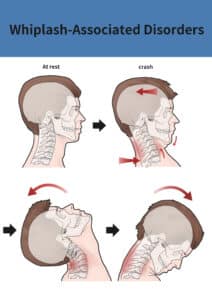
Whiplash severity is categorized on a scale of 0 to IV, with 0 representing no symptoms to IV representing a severe whiplash injury. The whiplash severity spectrum is as follows:
- Grade 0: No complaints about the neck. No physical sign(s).
- Grade I: Neck complaint of pain, stiffness or tenderness only. No physical sign(s).
- Grade II: Neck complaint AND musculoskeletal sign(s). Musculoskeletal signs include decreased range of motion and point tenderness.
- Grade III: Neck complaint AND neurological sign(s). Neurological signs include decreased range of motion and point tenderness.
- Grade IV: Neck complaint AND fracture or dislocation.
Is it Worth Suing for Whiplash?
Usually, yes. The good news is most whiplash cases are settled before a lawsuit is filed. But if the insurance company is being unreasonable, you certainly should file a lawsuit. Just because your injuries aren’t viewed by the insurance company as serious, doesn’t mean they aren’t and don’t justify seeking justice in court.
There are those whiplash cases where the injuries had subsided within a couple days or weeks, where quite a bit of time has gone by since the accident, and there has been no medical treatment. In these types of cases, there’s a good chance it might not be worth filing a lawsuit. But that doesn’t mean you shouldn’t pursue your case against the insurance company for compensation “prelitigation,” without filing a lawsuit. The best thing you can do is consult with a lawyer to make sure you’re not leaving any money on the table.
Do I Need a Lawyer for My Whiplash Case?
No, you don’t NEED a lawyer for a whiplash case. You can certainly handle it on your own. But as with anything concerning the law, things can get incredibly complicated fast.
There are so many laws intertwined in the practice of personal injury law, including tort, contracts, procedure, and evidence. You not only have to be aware of state (and sometimes federal) statutes, case (judge-made) law but you need to know how insurance companies handle claims. This is the benefit of having a personal injury lawyer help you on your case.
Although you will pay a personal injury lawyer a contingency fee on your case if you choose to use one, that fee will likely be minuscule compared to the upside that a lawyer adds to your case. In fact, there have been studies that showed claimants received 40% more when represented by an attorney.
How is a Whiplash Settlement Calculated?
Your whiplash case settlement will be calculated based on your “damages.” Your “damages” include your medical expenses, lost wages, and your “general damages.”
Your “general damages” are sometimes referred to as your “pain and suffering,” although that’s just one type under the general damages umbrella. There are many others including mental or emotional distress, impairment, or loss of enjoyment of life.
In most whiplash cases, the largest driver of value will be the medical expenses since insurance companies do not typically place a whole lot of pain and suffering on whiplash cases. So, undergoing reasonable medical treatment is extremely important to receive fair value for your whiplash case.
Here is an example to illustrate how a whiplash settlement is calculated:
Paula was rear-ended and suffered a whiplash injury to her neck. Right after the accident she sought treatment at the local emergency room and later followed up her care with a chiropractor.
Paula’s medical bills totaled $8,500. She also lost $1,500 in wages at her job as a result of her injuries. She felt that given her injuries, she should be compensated $5,000 for her pain and suffering. So, she may calculate her case value to be $8,500 + $1,500 + $5,000 = $15,000.
The insurance company of the driver who caused Paula’s accident will likely calculate her settlement using claims adjusting software. If she ends up filing a lawsuit and a jury hears her case, the jury will award her an amount that they think is reasonable given the evidence she’s presented.
Factors Affecting Whiplash Payouts
There are many factors that can affect the value of a whiplash case. These factors include:
Factor #1 – Medical treatment: Whiplash settlements will be heavily affected by the amount of your medical treatment.
Since whiplash isn’t typically an objective injury, you’ll need to prove your damages with the evidence of your medical treatment. This medical treatment will be documented in your medical records. The medical records will outline your injuries, complaints, diagnosis, medical treatment, and prognosis.
Without reasonable and consistent medical treatment, it might be difficult to achieve fair compensation for your whiplash injury.
Factor #2 – Severity of injury: As you may have guessed, the more serious your injuries, the greater your case value typically is. So, you’d expect most whiplash cases to be valued on the lower end of the settlement value spectrum. But that’s not always true. There are cases of whiplash that either have other more serious interrelated injuries, such as a concussion, or severe whiplash where the consequences may be felt for years or a lifetime after the accident. The key in these types of more severe whiplash cases is to provide as much evidence as you can to show proof that there is an actual permanent injury.
Factor #3 – Comparative fault: In most states, fault can be shared among the parties involved in an auto accident. If you share some of the blame for your accident, you may not be able to qualify for all of your recoverable damages. And even in some cases, may be barred completely from recovering anything.
Many states, like Florida and Texas, have what’s called a Modified Comparative Fault system where if you’re more than 50% at fault for your accident you are barred from recovering any of your damages. If you share some of the blame for your accident and it’s less than 50%, the amount of your recoverable damages will be reduced by that amount.
Other states, like Arizona and California, have a more forgiving system called Pure Comparative Fault. Under this system, even if you’re 99% at fault for your accident you can still technically recover some of your damages.
Factor #4 – Insurance policy limits: The amount of insurance that the at-fault party has will usually limit the amount of your recovery, unless they are a wealthy individual or a company with assets or you have underinsured motorist coverage on your own insurance policy.
Most states have a minimum liability requirement for bodily injury coverage that covers the innocent party’s medical expenses, lost wages, and pain and suffering in an auto accident.
Florida is one exception to that rule. Drivers in Florida are only required to have $10,000 in personal injury protection (PIP) and $10,000 in property damage. Typically, your own PIP coverage will cover 80% of medical bills and 60% of lost wages. The property damage coverage covers the innocent party’s damaged vehicle.
Other states minimum requirements will vary. An example of those states’ minimums are below:
Arizona
- Bodily Injury: $25,000 per person and $50,000 total per accident
- Property Damage: $15,000
California
- Bodily Injury: $15,000 per person and $30,000 total per accident
- Property Damage: $5,000
Texas
- Bodily Injury: $30,000 per person and $60,000 total per accident
- Property Damage: $25,000
Factor #5 – Health insurance: If you have health insurance or Medicaid/Medicare, it may severely impact the amount of your whiplash settlement. Some states like Texas have a rule that limits your medical damages to the amount that was paid or incurred. So, if your health insurance paid your medical bills, the amount of medical bills you can submit for your case will be what was paid by your plan, not what was billed.
California and Florida have a similar system to Texas.
However, in Arizona, payments by “collateral sources,” such as payments by health insurance do not come into evidence. This is a very beneficial rule to claimants.
Factor #6 – Plaintiff’s profile: Who you are can impact the value of your whiplash case. This includes your occupation, criminal history, gender, physical appearance, marital status, and other biographical information.
Factor #7 – Defendant’s profile: Who the defendant is can also impact the value of your whiplash case. This can include whether the defendant is a company or a criminal. If either of these are true, your case value may be positively affected.
How Do I Get the Most Out of My Whiplash Claim?
- Get medical treatment immediately after your accident and preferably at the emergency room.
- Follow up with consistent medical treatment with a chiropractor or physical therapist.
- Get an MRI if you’re not progressing with conservative treatment or have symptoms that indicate more than just soft tissue injuries, such as radiculopathy (radiating pain/numbness/tingling).
- Don’t settle your case until you’re released from all medical treatment or at least have an idea of what the future holds for your future medical care.
- Discuss your case with a car accident lawyer before you make any decisions.
How Long Should a Whiplash Claim Take?
Most whiplash cases settle within six months. But this will vary depending on how long your medical treatment takes since you should be released from all treatment prior to settling your case.
Some cases take longer if you’re not able to get a reasonable settlement and need to file a lawsuit.
If there is only a minimal amount of insurance and your damages exceed that amount, you may be able to settle your case immediately.
Should I Accept the First Whiplash Settlement Offer?
Absolutely not. You should always negotiate with the insurance company with several rounds of negotiations. Start at a high number and work your way down. Have a target in mind from the beginning of your negotiations so you know where you’re going.
Do Whiplash Claims Get Rejected?
Unfortunately, yes. Whiplash claims may get rejected for a host of reasons, including:
Coverage
The insurance company may deny your claim for several reasons. The most common would be that the policy lapsed for non-payment. Other reasons may be because the driver was not authorized to use the vehicle (e.g., vehicle was stolen) or the driver was using the vehicle for rideshare (e.g., Uber, Lyft, etc.) and didn’t have a rideshare endorsement on their policy.
Liability
The insurance company may have denied your whiplash claim because they determined that you caused the accident.
Minimum Impact
Due to the visible property damage, the insurance company may deny your whiplash claim, categorizing it as a Minor Impact Soft Tissue Injury (MIST) case. In this type of case, they will claim that there wasn’t a sufficient impact to cause an injury.
Fraud
An insurance company may deny your whiplash claim in cases where they suspect fraud. They will assign these claims to their internal fraud department called Special Investigative Unit (SIU). This usually occurs when they are aware of multiple claims being made by you or if you treated with a medical provider that is on their radar for overtreating patients or for excessive billing.
If your whiplash claim is ever rejected for any of the reasons above, don’t give up. Best thing to do is get a free consultation from a personal injury lawyer and see if they can help.
Is Whiplash Considered a Permanent Disability?
Yes, in some cases it can be considered a permanent disability. In cases where you suffered more than just strains and sprains of the neck muscles or tendons, a permanent injury may certainly exist.
The most common type of permanent injury that is related to whiplash injuries is a herniated disc of the cervical spine. A herniated disc can cause substantial impairment with loss of mobility and pain, numbness, tingling, and weakness in the neck, shoulders, arms, hands, and fingers.
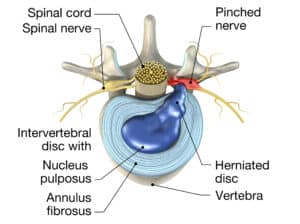
In some cases, the only way to alleviate symptoms from a herniated disc is to undergo surgery.
Whiplash Settlement and Verdict Examples
Below are some real whiplash settlements and verdicts from around the country.
Case Study #1: Client v. The Hartford Insured (Broward County, Florida):
Client was traveling northbound on a mall access road and through the West Hillsboro Boulevard intersection when defendant, a Hartford insured, ran a red light and struck Client’s vehicle on the left rear side causing it to change directions and strike the front bumper of another vehicle in the intersection.
Client presented to a chiropractor with complaints of neck, middle and lower back pain, and left hip pain. She was diagnosed with whiplash and strains and sprains of her back and hip. She treated with the chiropractor for 30 visits, underwent MRIs of her neck, back, and shoulder, and a consulted with an orthopedic doctor for her neck and back pain. The orthopedic doctor recommended epidural steroid injections in her neck and back. If those were unsuccessful at alleviating her pain, he recommended a microdiscectomy. Our Client declined both recommended procedures.
We later settled our Client’s case for the at-fault party’s policy limits of $100,000.
Case Study #2: Clients v. Progressive Insured (Montgomery County, Texas):
Clients, husband and wife, were traveling on Interstate 45 south in Conroe, Texas, when they were rear-ended by defendant, a Progressive insured.
The day after the accident, both clients presented to a medical doctor with complaints of pain in their necks (whiplash), and back pain. They were referred to conservative treatment with a chiropractor. Both of their pain persisted after a reasonable time after they started treating with the chiropractor and were referred out for MRIs of their neck and back. The radiologist noted several small disc herniations causing moderate to severe stenosis. As a result, they were referred to a pain doctor for pain management. Both clients underwent cervical epidural steroid injections.
After being released from treatment with minimal pain, we settled both of their cases for $50,000 each.
Case Study #3: Client v. Fred Loya Insured (Harris County, Texas):
While driving southbound on Gemini Avenue, our Client was t-boned at the El Camino Real intersection in Webster, Texas. Immediately after the accident, she presented to the emergency room with complaints of neck and shoulder pain. She later followed up with a chiropractor and underwent 13 treatment sessions. She was later referred out for an MRI but did not end up getting one.
We were able to successfully settle her case with Fred Loya for their policy limits of $30,000.
Case Study #4: Client v. Progressive Insured (Osceola County, Florida):
Our Client was traveling north on South Poinciana Boulevard north of County Road 531 in an unincorporated area in Osceola County, Florida when another driver hit her head on.
Immediately after the accident, our client presented to the emergency room by ambulance with complaints of abdominal pain, left hip pain, forearm laceration, abrasions to the left lateral neck, abrasions to the left groin, and abrasions to both knees. She was admitted overnight in the hospital due to not being able to stand up and walk on her own. She was released the next day and advised to follow up with her primary care physician.
Due to persisting pain, she presented to a chiropractor for an evaluation of her neck pain, low back pain, right wrist pain, bilateral leg pain, right ankle pain, and chest pain.
Due to the pain, positive orthopedic tests, restricted ranges of motion following a traumatic accident, he ordered a lumbar MRI and started her on a regiment of conservative therapy to improve ranges of motion, improve balance and coordination, decrease pain and spasm as well as strengthen the injured areas.
At the L4-L5 level of her spine, there was a 5 mm central disc herniation compressing the ventral epidural space and central L5 nerve roots. There was an associated disc bulge which extended into the neuroforamina bilaterally affecting the exiting L4 nerve roots, clinically correlated for L4 and/or L5 radiculopathy.
At settlement conference we were able to obtain a $100,000 policy limits settlement for our Client, the at-fault party’s policy limits.
Case Study #5: Client v. GEICO Insured and State Farm (Pima County, Arizona):
Our Client was rear-ended while making a U-turn on Sabino Canyon Road near Tanque Verde Road in Tucson, Arizona. Later that day she presented on her own to the emergency room with complaints of whiplash and lower back pain. CT scans were taken but there were no positive findings of any fractures.
Our Client later treated with a chiropractor for 30 sessions. She was released from treatment with minimal persistent pain.
We later settled her case against the at-fault party’s insurance company, GEICO, for their policy limits of $25,000. In addition, we achieved a settlement from her underinsured policy with State Farm for $7,500, for a total of $32,500 in total settlements.
Case Study #6: Plaintiff v. Defendant (San Joaquin County, California):
Plaintiff was traveling north on North El Dorado Street in Stockton, California. Defendant struck Plaintiff’s vehicle as he was attempting to make a left-hand turn onto East Churchill Street.
Plaintiff experienced whiplash and contusions to her chest wall, back, and finger. Immediately after the accident she was transported to the emergency room. She was diagnosed with a cervical strain.
Nine days later, Plaintiff commenced chiropractic treatment. She attended 24 treatment sessions over a span of three months. Two and a half years later she resumed chiropractic treatment with another chiropractor and underwent 13 sessions.
The jury awarded her $14,000 in total damages, including $9,000 for past pain and suffering and $5,000 for future pain and suffering.
Case Study #7: Plaintiff v. GEICO Insured (Orange County, California):
Plaintiff was rear-ended on MacArthur Boulevard near the exit of California State Route 73 in Irvine, California.
Plaintiff claimed she suffered whiplash and hearing loss in her left ear from the accident. She presented to her doctor eight days later with neck and back pain only.
The jury awarded her $253,453.63. This included $20,000 for future medical costs, $20,000 past pain and suffering, $200,000 for future pain and suffering, and $13,454 in past medical costs.
Case Study #8: Plaintiff v. Allstate Insured (Orange County, California):
Plaintiff was t-boned while he was driving through the intersection of Deere Avenue and Red Hill Avenue in Irvine, California. Plaintiff later went to urgent care with complaints of whiplash and headaches.
Plaintiff later treated with a chiropractor and underwent occipital nerve block injections. His treating orthopedic doctor opined that he would need these nerve block injections for the rest of his life to manage his headaches.
The jury awarded the plaintiff $57.500, including $15,000 for past medical expenses, $7,500 for future medical expenses, and $35,000 for pain and suffering.
Case Study #9: Plaintiff v. Nova Casualty Insured (Tarrant County, Texas):
Plaintiff was struck by a cement truck driven by defendant while traveling on Bailey Boswell Road in Saginaw, Texas.
Plaintiff was taken to the emergency room by ambulance immediately after the accident. She later followed up with a chiropractor for the pain in her neck. She was later referred out for an MRI of her neck where two disc herniations were revealed.
Later, she was referred to a pain doctor and recommended pain injections but refused. She also saw an orthopedic surgeon where she was recommended a cervical fusion surgery, which she also refused.
Plaintiff was awarded $250,000 at trial, with $100,000 for past medical expenses and $150,000 for future medical expenses.
Case Study #10: Plaintiff v. Progressive Insured (Williamson County, Texas):
Plaintiff was traveling on A.W. Grimes Boulevard in Round Rock, Texas when she was rear ended by defendant.
Plaintiff claimed whiplash injuries and presented to her primary care doctor 10 days later. She was later referred to a chiropractor for conservative treatment. She underwent three MRIs and an EMG where it was shown that she had a pinched nerve.
The jury awarded $50,900 to the plaintiff, including $33,900 for past medical expenses, $5,000 for past physical impairment, and $12,000 for past pain and suffering.
Contact Our Experienced Car Accident Lawyers for Your Whiplash Injury Case
Call us today if you were in an auto accident and suffered a whiplash injury. We will give you a free, no risk strategy session to help win your whiplash injury case. Call us at (855) 545-1777 to speak directly with one of our attorneys.