Call Us Now
 e-Mail Us Now
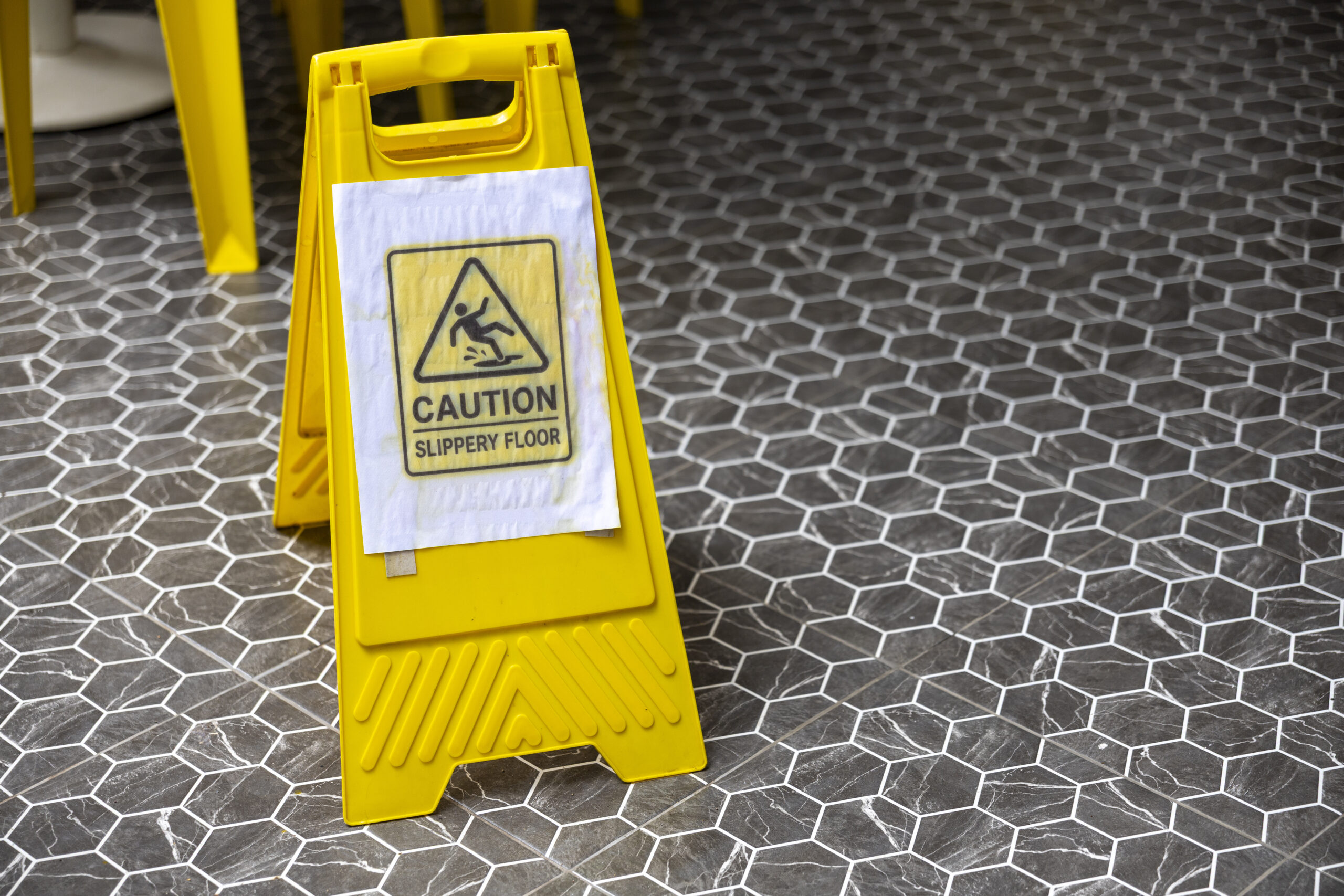
People assume a slip and fall claim is simple. You fell in a store, the store owns the floor, so the store pays. Arizona law does not work that way.
A fall by itself proves nothing. You have to show the property owner did something wrong, and that usually means proving what the owner knew about the hazard and when. This guide walks through the duty owed to you, the notice requirement that decides most cases, the exception that many published guides leave out, and the deadlines that can end a claim before it starts.
Your Status on the Property Sets the Duty
Arizona sorts visitors into three categories, and the category controls what the owner owed you.
An invitee enters for the owner’s benefit. Shoppers, restaurant customers, and hotel guests all qualify. Owners owe invitees the most: a duty to keep the property reasonably safe and to warn about dangers. A licensee enters with permission but for their own purposes, such as a social guest. Owners must warn licensees about known hidden dangers. A trespasser is owed almost nothing, short of willful or wanton conduct by the owner.
Most Tucson slip and fall cases involve invitees, which is the strongest position to be in. It still does not make the owner automatically responsible.
A Fall Alone Proves Nothing
Arizona courts have said it plainly. A business must make and keep its premises reasonably safe for customers. An owner who did not create the hazard, though, is not liable simply because an accident happened on the property.
So the question becomes narrower. Did the owner create the dangerous condition? If not, did the owner know about it, or should the owner have known?
The Notice Requirement Decides Most Cases
Notice comes in two forms. Actual notice means someone at the business knew. An employee saw the spill, a customer reported it, or a manager logged it. Constructive notice means the hazard sat there long enough that reasonable inspections should have caught it.
Time is the whole battle in constructive notice. A puddle that appeared thirty seconds before you fell will not support a claim. The same puddle sitting for forty minutes in a busy aisle usually will. Defense lawyers know this, which is why they focus so hard on when the hazard appeared.
The Exception Most Articles Leave Out
Many guides stop at notice and imply you always have to prove it. Arizona recognizes an important exception.
Under the mode of operation rule, recognized in Chiara v. Fry’s Food Stores of Arizona, a customer can prove negligence without showing the owner had notice of the specific hazard. The rule applies where a business chose a method of operation that predictably produces dangerous conditions on a regular basis. Self-service displays are the classic example. So are open produce bins, self-serve drink stations, and salad bars.
You still have to prove two things. First, that the business adopted such a method of operation. Second, that it failed to use reasonable care to prevent harm given that choice. The rule does not make the business automatically liable. It does remove the impossible burden of proving how long a spill sat on the floor when nobody saw it happen.
Where These Falls Actually Happen
Grocery and big box stores generate the most claims, usually from spills, dropped produce, or leaking refrigerator cases. Restaurants produce falls near drink stations and kitchen doorways. Apartment complexes and hotels bring their own set: broken stair treads, unlit walkways, and pool decks.
Tucson adds a few local wrinkles. Monsoon season turns entryways slick within minutes, and stores that do not put out mats or warning cones during a storm face a hard argument about reasonable care. Parking lot falls are common too, though those often involve a property management company rather than the business you were visiting. Identifying the right defendant early matters, because the wrong one wastes months.
Evidence That Wins These Cases
Surveillance video matters more than anything else, and it disappears fastest. Many retailers overwrite footage within days or weeks unless someone demands preservation. That request should go out immediately.
Sweep logs and inspection records show how often staff actually checked the area, as opposed to how often policy said they should. Incident reports capture early statements before anyone has consulted a lawyer. Photographs of the hazard, taken before staff clean it up, often decide the case. So does the name of any employee who reacted as though they already knew about the problem.
Partial Fault Reduces a Claim but Never Ends It
Arizona applies pure comparative negligence. A.R.S. Section 12-2505 reduces your damages in proportion to your own fault, but it does not bar the claim. The statute also makes contributory negligence and assumption of risk questions of fact for the jury in every case.
Expect the standard arguments anyway. You looked at your phone. You wore the wrong shoes. You walked past a warning sign. Each of those reduces a percentage rather than ending the case. Even a customer assigned most of the blame recovers the remainder.
Falls on Government Property Run on a Different Clock
Arizona gives you two years to file most injury lawsuits. A fall on public property changes that completely, and the change traps people.
City sidewalks, public parks, government buildings, and public school grounds all trigger A.R.S. Section 12-821.01, which requires a formal notice of claim within 180 days. The lawsuit deadline also shortens to one year. Miss the notice and the public entity has a complete defense, no matter how clear its fault was. Count those days from the date of the fall, not the date you finished treatment.
Mistakes That Sink a Tucson Slip and Fall Claim
- Do not leave without reporting the fall and requesting a copy of the incident report
- Do not wait to demand that the business preserve its surveillance video
- Do not tell staff you are fine before a doctor has examined you
- Do not assume you have two years when the fall happened on public property
- Do not accept an offer that blames your footwear or your attention before anyone reviews the video
State-Specific Notes
The rules above are Arizona law. Milano Legal Group also serves California, Florida, and Texas, and each handles premises cases differently. California applies pure comparative negligence like Arizona, so partial fault only reduces a recovery. Florida and Texas both bar recovery once your share of fault passes 50 percent, which raises the stakes on every argument the defense makes about your own care. Government claim deadlines vary widely across all four states, and they are always shorter than people expect.
How Milano Legal Group Can Help
These cases turn on evidence the property owner controls. We move quickly to demand video and sweep logs before anyone overwrites or discards them. We evaluate whether the mode of operation rule applies, which changes what you have to prove. Then we press the notice question with records rather than argument. Learn how we handle property injury claims on our premises liability page. You can also see our local practice on our Tucson premises liability page.
We work on a contingency basis, so there are no fees unless we win. Call Milano Legal Group today at 855-545-1777 for a free, no-obligation case evaluation. Serving clients throughout Arizona, California, Florida, and Texas.